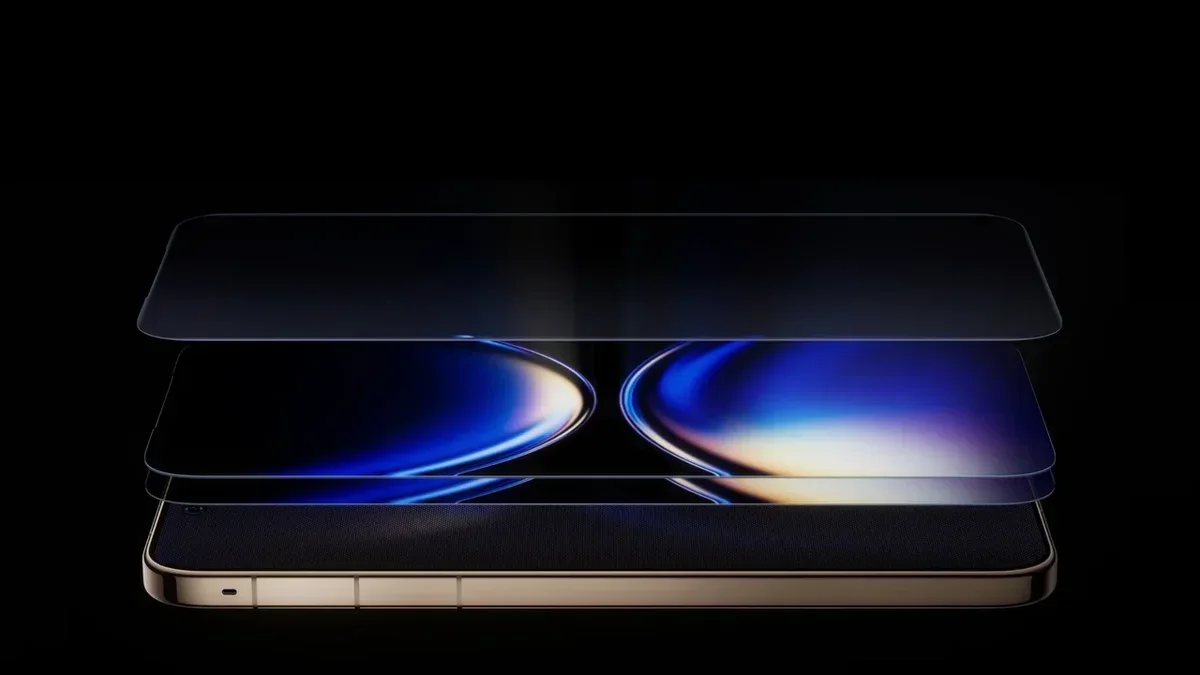
The Mate 80 Pro has a neat trick up its sleeve. | Image by Huawei
Much to the shock of certain American officials, Huawei refuses to wither away. Sure the heavy US-imposed sanctions have accomplished their goal – to drive Huawei away from the US market.
But the company behind some of the most beloved phones in recent times – like the Huawei P30 Pro – just can't stop innovating.
Huawei may have quietly addressed one of the most persistent frustrations in modern smartphone design: the difficulty of using large phones with one hand.
Recommended For You
The "Smart Grip" feature
Very impressive! | Image by Huawei
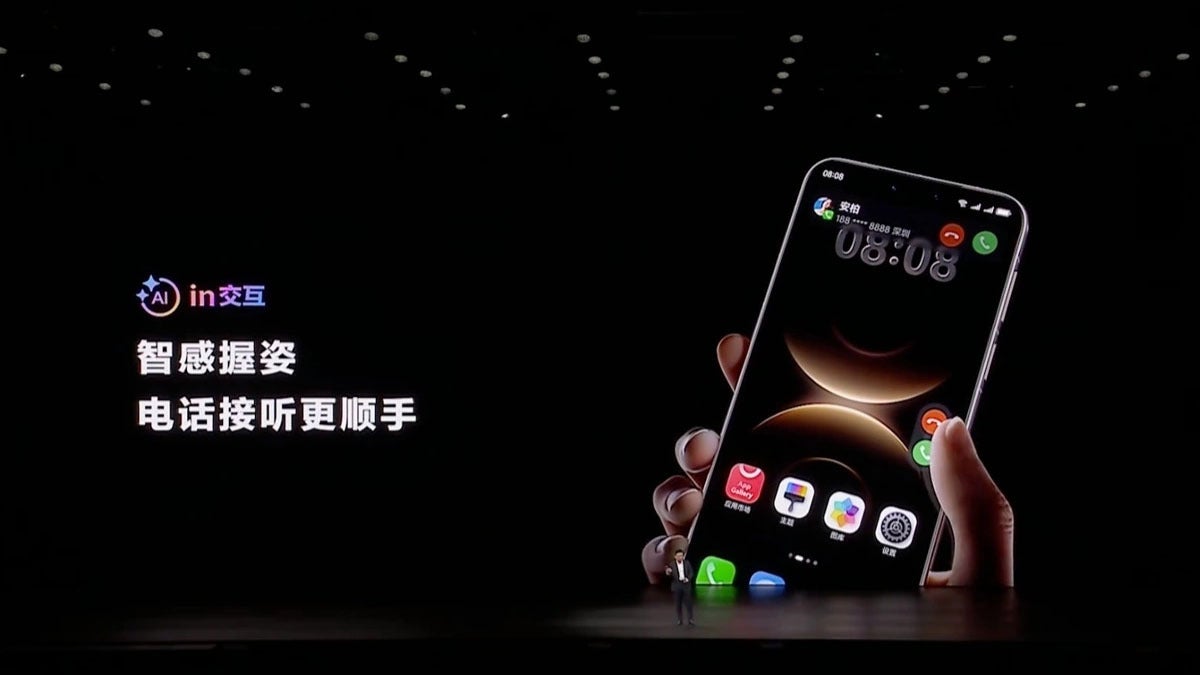
At the center of it is Huawei's "Smart Grip" feature. Instead of forcing users to stretch their thumbs across ever-growing displays, the device adapts the interface to the user in real time. A brilliant idea.
Using a combination of edge-based sensors and 3D ToF (Time of Flight) technology, the Mate 80 Pro constantly maps how it is being held. It identifies which hand is in use, where the thumb is and how the grip changes in real time. That data is processed instantly on the phone itself, powered by Huawei's own Kirin processors and handled entirely on-device through HarmonyOS. So, no cloud services, no internet connection!
Recommended For You
When someone calls you, the green and red (answer and decline) buttons don't stay fixed in the center of the screen. Instead, they move down to sit directly under your thumb. The phone effectively meets the user halfway, removing the need to stretch or adjust grip just to tap a button.
The natural grip
This is what could actually make AI useful in practical terms. Instead of focusing on generative models that produce text or images, Huawei is applying AI to physical ergonomics and it's a winning strategy in my eyes.
There's also an interesting contrast in how this feature comes to life.
The Smart Grip system relies heavily on advanced sensor fusion and on-device processing, which depends on Huawei's Kirin 9030 series chips. These chips are produced using manufacturing methods that are far from straightforward. Due to the US-imposed bans and restrictions, Huawei cannot access the most advanced EUV lithography machines used by many global chipmakers.
As a result, its chips are built using a more complex and resource-intensive approach that requires multiple patterning steps with older equipment. This process is slower, more costly and less efficient, with significantly lower yields than modern alternatives. Despite those constraints, Huawei continues to push forward, extracting as much capability as possible from the tools it can access.
Which brand should adopt this next?
The next step
Smart Grip is already a meaningful step forward, but it also raises the question of what else could be done to improve large-screen usability.
This could expand to predictive UI behavior, anticipating not just where a thumb is, but what the user is likely to do next. Frequently used controls could subtly shift toward the user's preferred reach zones over time. Gesture-based controls, combined with spatial awareness, could allow certain actions to be performed without touching the screen at all, further reducing strain.
There is also room to rethink how applications themselves are designed. If developers embraced dynamic interfaces that adapt to hand position, apps could become more fluid and personalized. Instead of static layouts, interfaces could respond to real-world usage patterns.
Make it shine
Another step forward could be making Smart Grip work together with the phone's overall system. For example, the device could recognize when someone is walking, multitasking or using it one-handed, and adjust the interface to show only the most important controls. This would take the idea beyond just hand position and make the phone react to real-life situations.
The bigger point is that AI doesn't always need to be flashy to matter. It doesn't have to generate text or images to be useful. Sometimes, it works best in the background, quietly making everyday actions easier.
Sebastian, a veteran of a tech writer with over 15 years of experience in media and marketing, blends his lifelong fascination with writing and technology to provide valuable insights into the realm of mobile devices. Embracing the evolution from PCs to smartphones, he harbors a special appreciation for the Google Pixel line due to their superior camera capabilities. Known for his engaging storytelling style, sprinkled with rich literary and film references, Sebastian critically explores the impact of technology on society, while also perpetually seeking out the next great tech deal, making him a distinct and relatable voice in the tech world.
A discussion is a place, where people can voice their opinion, no matter if it
is positive, neutral or negative. However, when posting, one must stay true to the topic, and not just share some
random thoughts, which are not directly related to the matter.
Things that are NOT allowed:
Off-topic talk - you must stick to the subject of discussion
Offensive, hate speech - if you want to say something, say it politely
Spam/Advertisements - these posts are deleted
Multiple accounts - one person can have only one account
Impersonations and offensive nicknames - these accounts get banned
To help keep our community safe and free from spam, we apply temporary limits to newly created accounts:
New accounts created within the last 24 hours may experience restrictions on how frequently they can
post or comment.
These limits are in place as a precaution and will automatically lift.
Moderation is done by humans. We try to be as objective as possible and moderate with zero bias. If you think a
post should be moderated - please, report it.
Have a question about the rules or why you have been moderated/limited/banned? Please,
contact us.




![T-Mobile is about to test the limits of customer loyalty [UPDATED]](https://m-cdn.phonearena.com/images/article/179374-wide-two_350/T-Mobile-is-about-to-test-the-limits-of-customer-loyalty-UPDATED.webp)



Things that are NOT allowed:
To help keep our community safe and free from spam, we apply temporary limits to newly created accounts: