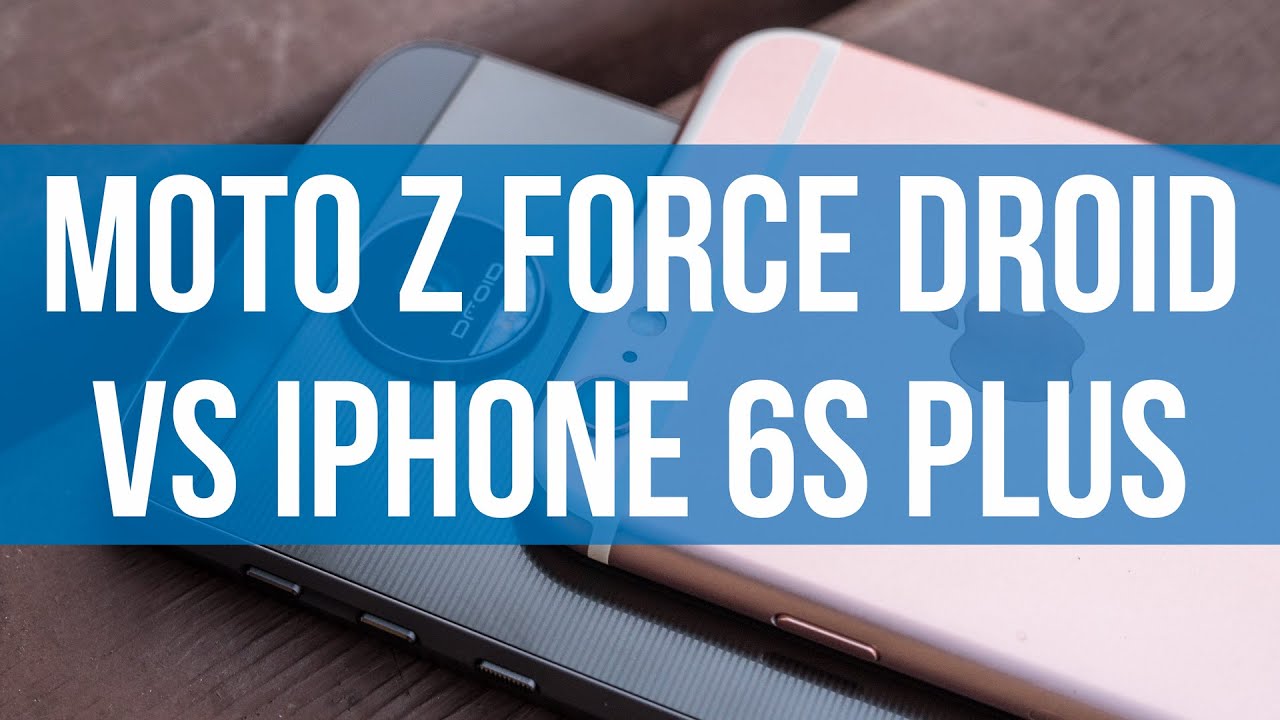
Moto Z Force Droid vs Apple iPhone 6s Plus

Introduction
Smartphone manufacturers are always looking to be among the first to bring users the next big thing. Sometimes those moves pay off, and things like the rise of phablet-sized devices, the return of fingerprint scanners, and support for fast charging have quickly entered the mainstream. Other times we get a swing-and-a-miss, and tech like autostereoscopic 3D displays fails to catch on in any appreciable fashion. Right now phone makers are once again trying something new, as smartphones built to take advantage of modular hardware add-ons appear on the market. And just a few days back, we took a look at the latest such system to debut, with Lenovo's Moto Z Droid, Moto Z Force Droid, and the Moto Mods getting ready to arrive.

Design

In a market where it's so easy to open criticism of a new smartphone with “that looks like it's ripping off the iPhone,” it's almost refreshing to see the extent to which the Moto Z Force Droid manages to stand on its own from a design perspective. Some choices, like its flat back panel bordered by a sharp drop-off around the edge, are clearly a consequence of Lenovo's move to implement Moto Mods. Others, like the way the edge strip includes a raised peak to help with grip quality, seem to take inspiration from elsewhere. But wherever all those pieces came from, they add up to giving the Moto Z Force Droid a distinguished, unmistakeable look that you're not likely to have come across before.

6.14 x 2.98 x 0.28 inches
155.9 x 75.8 x 6.99 mm
5.75 oz (163 g)

6.23 x 3.07 x 0.29 inches
158.2 x 77.9 x 7.3 mm
6.77 oz (192 g)

6.14 x 2.98 x 0.28 inches
155.9 x 75.8 x 6.99 mm
5.75 oz (163 g)

6.23 x 3.07 x 0.29 inches
158.2 x 77.9 x 7.3 mm
6.77 oz (192 g)
See the full Motorola Moto Z Force Droid Edition vs Apple iPhone 6s Plus size comparison or compare them to other phones using our Size Comparison tool.
Display

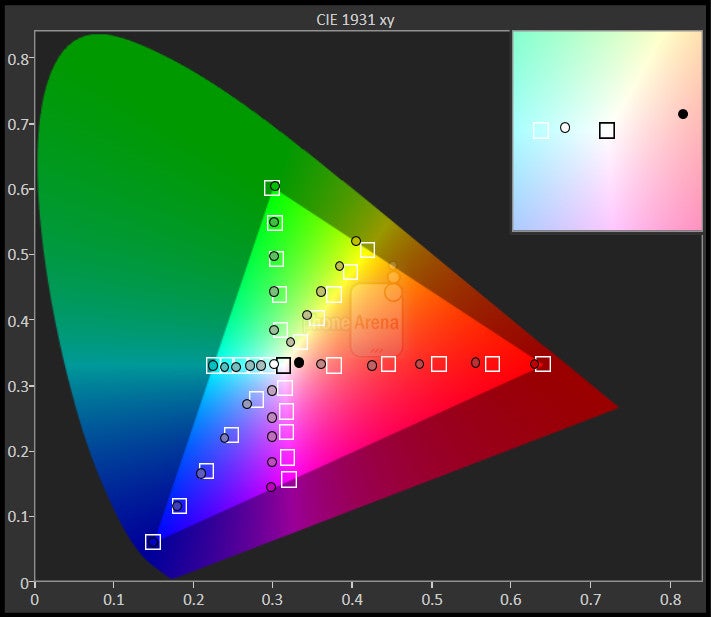
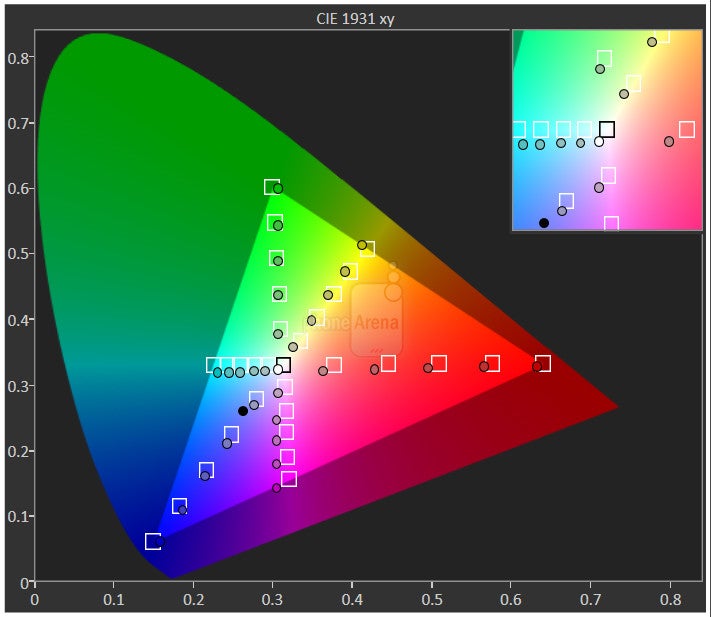
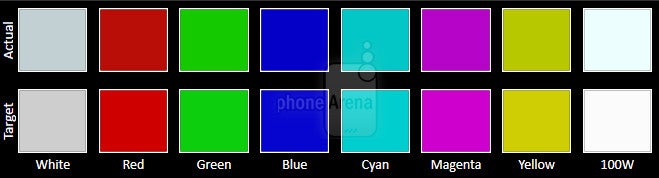
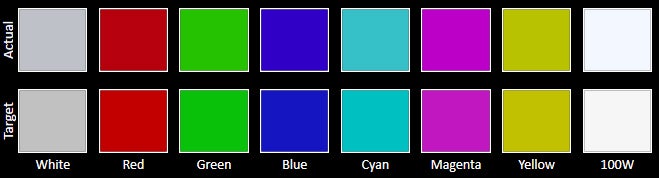
Both the iPhone and Moto handset are equipped with phablet-class 5.5-inch screens: Apple's using a 1080 x 1920 LCD panel, and Lenovo has a higher-res 1440 x 2560 AMOLED component. Those extra pixels don't result in a night-and-day difference in picture clarity between the two, but they do give the Moto Z Force Droid a slight edge in things like rendering really natural-looking text.
The 3D Touch force-sensitive input on the iPhone 6s Plus is a nice bonus feature, though it falls short of being a must-have. And the Moto phone picks up a special enhancement of its own, boasting the same ShatterShield impact-resistant construction as last year's Droid Turbo 2. While we certainly don't plan to go dropping our phones everyday, that's definitely a nice feature to have there when we need it.


Interface

The differences between Android and iOS have been mused upon extensively already, and while they were once very different platforms, it feels like the gap between them has been getting narrower and narrower in recent years; Apple's been picking up a greater variety of user-customization options, while Android's been making headway on making sure users get a smooth, stutter-free UI.
Interface of Moto Z Force Droid
The iPhone 6s Plus, meanwhile, gets to enjoy the iOS interface enhancements made possible by the aforementioned 3D Touch support.
The interface on the iPhone 6s Plus
Processor and Memory
The Moto Z Force Droid isn't thinking too far outside the box when it comes to its silicon, and the combination of a Snapdragon 820 processor and 4GB of RAM might as well be called “the 2016 flagship special” by this point. And just as we'd hope, it offers the same kind of blazingly fast operation that this year's best phones have become known for.
As far as storage is concerned, Verizon's only selling the Moto Z Force Droid in a single 32GB configuration. While that's a little limiting, the phone does support microSD expansion through its combined SIM/microSD tray, allowing users to seriously super-charge capacity. And though the iPhone 6s Plus lacks such expansion possibilities, the phone is available with much more internal storage, with capacities hitting 128GB.
Internet and connectivity

If you're not into operating a phone on Verizon's network, you're out of luck with the Z Force Droid. Apple's iPhone 6s Plus, meanwhile, is a whole lot more flexible in terms of whose network it operates on.
Both phones have a healthy assortment of wireless connectivity options, including Wi-Fi, Bluetooth, and even NFC, and both feature reversible connectors for wired data: Lightning on the iPhone and USB Type-C on the Moto.
Camera

Each of these phones attempts to deliver camera upgrades over their lesser-equipped cousins. In the case of the iPhone 6s Plus, that means picking up optical stabilization.
The Moto Z Droid already supports optical image stabilization, and the Force model instead ups resolution from 13MP to a hefty 21MP, while also adding a phase-detection mode to the existing laser-assisted auto-focus.
Camera interface of the Moto Z Force Droid
Camera interface of the Apple iPhone 6s Plus
What is clear is that despite having only a 12MP sensor, the iPhone 6s Plus is not hurting for resolution, and even upon zooming in its photos revealed detail comparable to the Moto Z Force Droid.
Moto Z Force Droid vs Apple iPhone 6s Plus Sample Pictures
Both phones are capable of video recording up to 4K. Just like in still photos, the Moto's output is darker and higher-contrast than Apple's, and the camera's mic feels a little better at picking up audio than the iPhone's. But despite all its fancy auto-focus hardware, the Moto Z Force Droid struggles to reacquire focus after abrupt change of filming subject, while the iPhone 6s Plus handles the shift far more gracefully.
Moto Z Force Droid vs Apple iPhone 6s Plus Sample Videos
Multimedia

The Moto Z Force Droid's preference for stock Google apps means there's no special media player for the phone, driving us to focus more on the hardware comparison between the handsets. The Moto is equipped with a single front-facing speaker in its earpiece, while Apple returns to its bottom-edge placement.
The iPhone's audio sounds richer, with a better balance of frequencies than the Moto's, but listening to music on a smartphone is about more than just fidelity, and the Moto's front-facing speaker is positioned a lot better to effect easy listening of the media of your choice. It's also louder than Apple's.
There's also that Moto Insta-Share projector for the Moto Z Force Droid, instantly turning it into a big-screen entertainment system. Issues with brightness and battery life (to say nothing of cost) mean you probably won't be watching with it all the time, but the Moto gets points for the simple availability of the option.
Call Quality

Both of these are two very advanced handsets, with support for all manner of advanced communication options – and yet time and time again, we find ourselves needing to make plain old telephone calls.
Neither model really disappoints, and while we'd have to say that audio quality on the Moto is a little crisper, it's also speckled with a few more rough edges – nothing so severe as to interfere with your call, nor really be heard unless you're listening for them, but the effect is that of a more “raw,” unrefined connection.
Both models support higher-quality voice-over-LTE calls, so long as the party you're calling also has access to the tech.
Battery

That doesn't mean that the Moto Z Force Droid is necessarily a loser, though, and it does manage to score one important victory: it can reach a full charge in under two hours, while the iPhone takes closer to three. And if you don't need a fully-restored battery, the Moto's “Turbo Power” tech lets you add several hours of usable time (albeit not in continual operation) with just 15 minutes attached to the charger.
Conclusion
The even more difficult comparison is the direct one between these two handsets, as they're so very, very different: the iPhone 6s Plus is a phone about style, refinement, and quiet performance. The Moto Z Force Droid is far less reserved, with aggressive styling, a prominent camera bump that practically screams “look at me,” and an emphasis on durability.
If battery life and style are your big concerns, go with the Apple. If you absolutely have to try some of this modular hardware action for yourself, the Moto is the easy choice. But no matter which of these phones you choose, you're not likely to be let down – they both represent handsets near the top of their fields.
Moto Z Force Droid
Pros
- Impressively thin and pocketable
- Fast-charging support helps make up for battery life issues
- Moto Mods ecosystem adds whole new dimension of hardware expansion
Apple iPhone 6s Plus
Pros
- Exceptionally well-executed hardware is still challenging new flagships ten months later
- Battery life is surprisingly strong
- Camera produces incredibly detailed pics, even compared to higher-res sensors

Follow us on Google News









Things that are NOT allowed:
To help keep our community safe and free from spam, we apply temporary limits to newly created accounts: