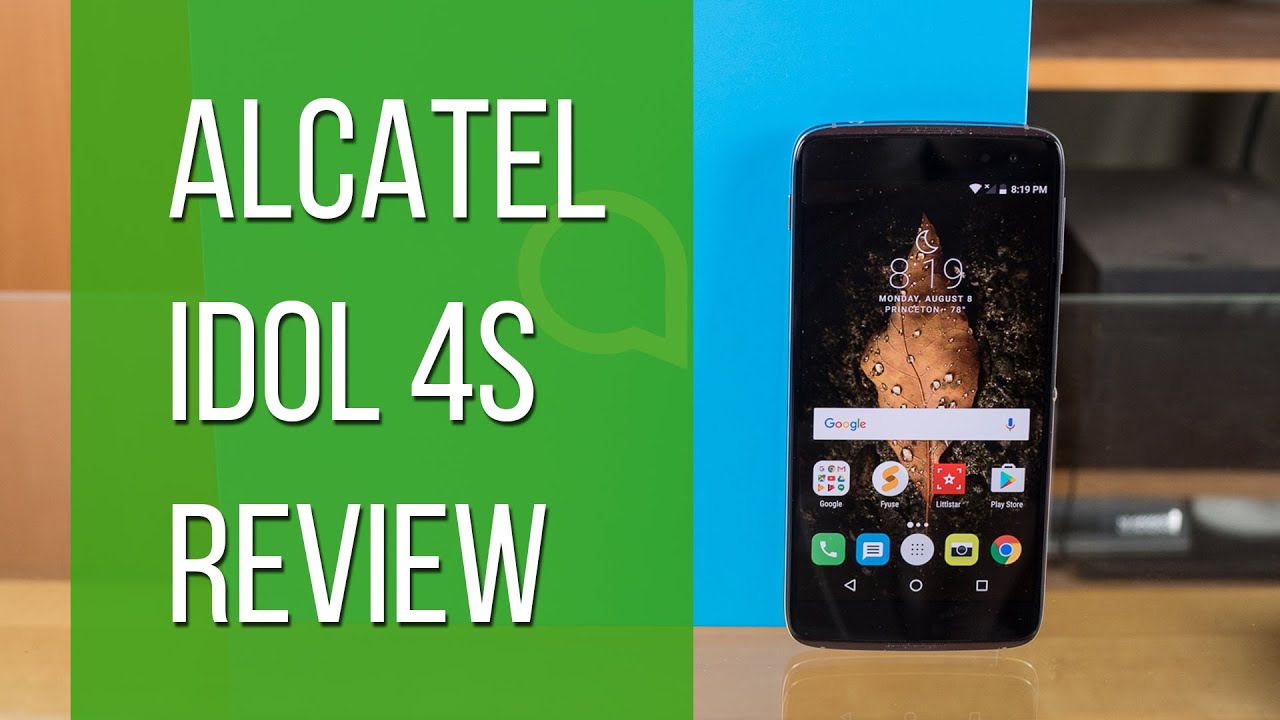
Alcatel Idol 4S Review

Introduction
The smartphone market is all too often one of extremes. It's easy to throw down $700 on a new phone and expect screaming performance, innovative new features, and an attractive design incorporating plenty of premium-feeling materials. It's also easy to cut every corner you can find, delivering a phone that captivates shoppers with its incredibly low price tag – while leaving them wanting just about everywhere else.
With the new Idol 4S, Alcatel is attempting to walk that tightrope, giving us a $400 smartphone that's well built, offers competitive performance, and can hook shoppers up with extras like the custom-designed VR headset it comes contained in.
- Alcatel Idol 4S
- Micro USB cable
- Fast charging adapter
- Feature guide
- SIM tool
- JBL earbuds
- Alcatel VR goggles
Design
Alcatel's really intent on drawing attention to those speakers

One of the first things you're likely to notice about the Idol 4S's design is that the phone's glass (which you'll find both front and back) doesn't quite stretch all the way to the handset's top and bottom edges. Instead, you have a few millimeters of metal frame sticking out, housing the phone's stereo speakers. Oddly, the speaker grilles are visible on the phone's front and back alike, though the speakers themselves only face forward.
The other component that really screams for attention is the phone's side-mounted circular “Boom key” button, a multi-purpose interface for calling upon a number of software features. Its look is reminiscent of the power button on older Xperia models.

6.06 x 2.97 x 0.28 inches
153.9 x 75.4 x 6.99 mm
5.26 oz (149 g)

5.97 x 2.99 x 0.31 inches
151.7 x 76 x 7.8 mm
5.96 oz (169 g)

6.02 x 3.02 x 0.39 inches
153 x 76.6 x 9.8 mm
5.47 oz (155 g)

5.65 x 2.73 x 0.31 inches
143.6 x 69.45 x 7.99 mm
5.19 oz (147 g)

6.06 x 2.97 x 0.28 inches
153.9 x 75.4 x 6.99 mm
5.26 oz (149 g)

5.97 x 2.99 x 0.31 inches
151.7 x 76 x 7.8 mm
5.96 oz (169 g)

6.02 x 3.02 x 0.39 inches
153 x 76.6 x 9.8 mm
5.47 oz (155 g)

5.65 x 2.73 x 0.31 inches
143.6 x 69.45 x 7.99 mm
5.19 oz (147 g)
Compare these and other phones using our Size Comparison tool.
Display
Quad HD on a mid-priced phone is nothing to shake a stick at

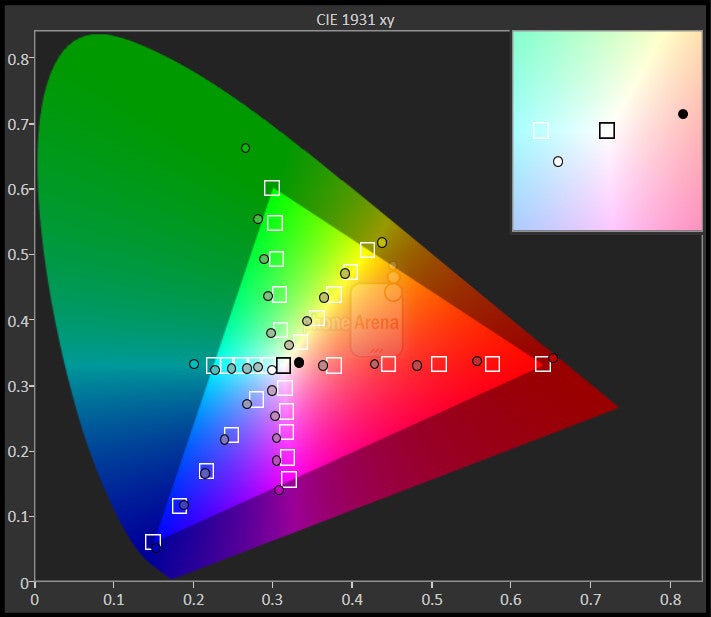
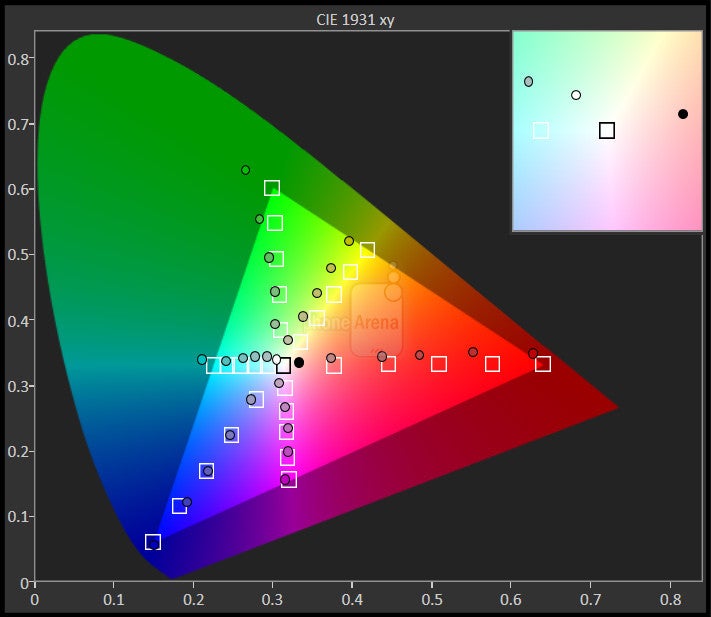
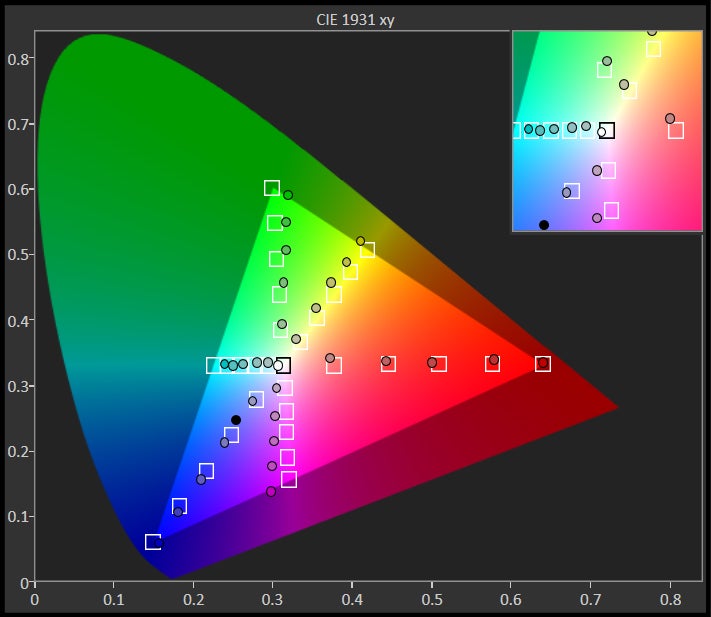
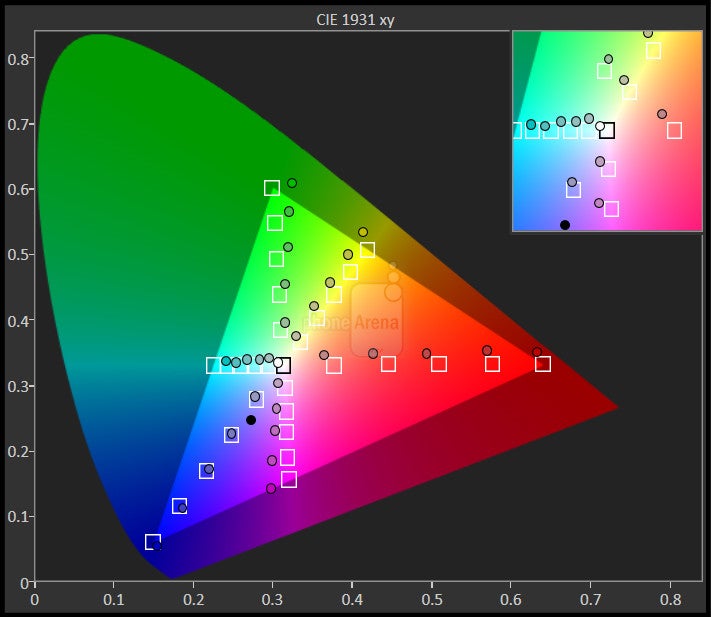
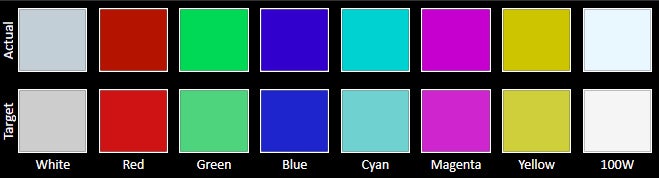
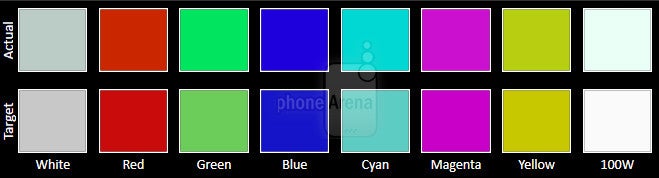
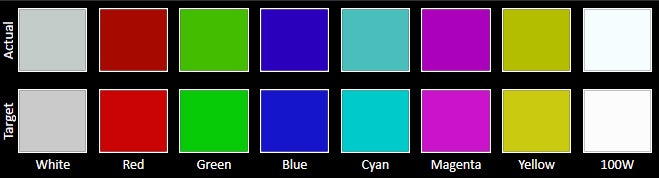
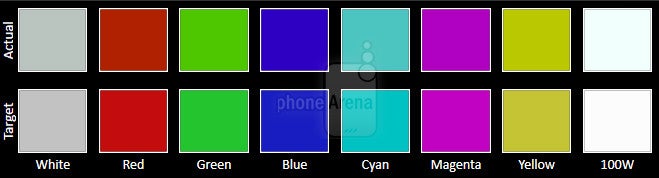
We love it when mid-rangers share the same sort of components we see in high-end flagships, and Alcatel is giving us just such a high-quality part in the form of the Idol 4S's 5.5-inch quad-HD (1440 x 2560) AMOLED panel. It's bright, and offers just the sort of overblown-but-still-quite-nice-to-look-at (if somewhat less than accurate) saturation OLED screens are known for.




Interface and Functionality
And Boom (key) goes the dynamite

Alcatel delivers the Idol 4S running Android 6.0.1, and while it can't resist the urge to fancy-up the interface a little bit, the company's additions aren't too extreme as Android UI overhauls go. We get some gesture commands, lockscreen shortcuts, and a cute Amazon Fire Phone-like fake 3D effect when you tilt the handset, but the big deal here is what can be done with the phone's hardware Boom key.

The Boom key settings
Processor and Memory
One of the best-performing Snapdragon 600-series phones to date

When we first heard that Alcatel was bringing us a phone with a quad-HD display and a Snapdragon 600-series processor, we had our doubts; was performance going to suffer just so Alcatel could wow us with all those pretty pixels? But this ain't your momma's Snapdragon, and the Idol 4S runs the Snapdragon 652 (née 620). Qualcomm changed the name in order to emphasize just how advanced this chip is compared to other 600-series Snapdragons, and it's not lying.
For instance, comparing benchmark results with the Snapdragon 617-powered Moto G4, the Idol 4S pulls in scores that are twice as high in many tests. Real-world usage of the phone similarly reflects the power of the 652 chip, with smooth scrolling and fast response times. And while it still has a ways to go to catch up with top-shelf silicon like the Snapdragon 820, it's an extremely solid choice for a budget handset like the Idol 4S.
We're also happy with the decision to hook the Idol 4S up with 3GB of RAM; it's not clear 4GB would offer an appreciable performance benefit, and this feels like a bit of a sweet spot.

Connectivity
Nothing fancy, but still solid LTE band support

The Idol 4S is being sold as an unlocked handset, and it's got the radio compatibility to work with your choice of T-Mobile or AT&T's network – all their LTE bands are supported. If you live elsewhere or are planning to go with another carrier, keep in mind that we're looking at LTE bands 2, 4, 5, 7, 12, and 17.
Camera
A lot of fancy effects for a pretty standard camera

The Idol 4S has a 16MP main camera, with a Sony IMX 298 main sensor – the same as you'll find on the OnePlus 3 or the Huawei Mate 8. Around front, there's a wide-angle (84-degree) 8MP selfie cam with its own well-hidden LED flash.
Maybe more than anything, Alcatel's camera ambitions seem dictated by software. In addition to the standard auto/pro/panorama/video modes of your usual smartphone camera, Alcatel adds in its micro-video mode and software from Fyuse that creates “3D” photos by filming a subject from multiple angles and using phone sensors to let you twist the handset to view all those angles in playback. It's all a bit gimmicky, without significantly improving the camera experience.

Camera UI
Image quality
Not a piece of junk, but don't expect to be wowed
It's so frustrating when you have what should be a very capable camera, and just can't seem to get consistently good pics out of it. So is the case with the Idol 4S; most of the time, images look fine – at least at full crop, as it doesn't take much zooming for things to become a noisy mess. But every now and then you'll get a shot that's not quite in focus, or looks muddled and dull despite an abundance of scene lighting.
That's particularly frustrating as Alcatel emphasizes the phone's fast auto-focus speeds. Fast is good, but sharp is better, and the Idol 4S let us down more than once. We also ran into issues with motion blurring in auto mode due to shutter speeds which should have been much higher – again, despite the presence of copious light.
Alcatel Idol 4S sample images
Video recording
A pleasantly surprising 4K experience
You no longer need a best-in-class flagship smartphone to record ultra-high-res 4K video, and between its 16MP sensor and Snapdragon 652 processor, the Idol 4S has what it takes to scratch your beyond-HD itch.
4K recording performance didn't let us down; we just wish we could say the same for 1080p and 720p, neither of which looked as sharp as we'd expect.
Re-focusing was also a bit of a slog during video recording, with the camera struggling to re-acquire objects moving into the frame.
Alcatel Idol 4S sample videos
Multimedia
Great hardware, unnecessary software

Front-firing stereo speakers are always a treat, and the Alcatel Idol 4S manages to implement them quite well. They're loud, crisp, just bassy enough, and with adequate stereo separation. Considering how incredibly conspicuous they are, jutting out from the sides of the phone's screen, we'd expect nothing less.
All that hardware is fine, but then there's the software, where Alcatel offers Waves MaxxAudio tweaks. If you like fiddling with levels and equalizers, maybe this package is right up your alley – and there's even an auto-mode to handle those settings for you – but audio “enhancement” software in general feels misguided. Shouldn't a phone with a good audio system try to make its playback as quantitatively accurate as possible, and not what qualitatively sounds “better?”
Call Quality
Low-distortion, just how we like it

While making outgoing calls, we were really pleased with the audio quality coming in through the Idol 4S: clean, intelligible, and largely interference-free. Unfortunately, the same can't necessarily be said for how things sound on the other end, and parties we called reported occasionally difficulty in hearing us – though to be fair, that may be more a consequence of the cellular connection than anything.
Battery Life
Long life + fast charging = win

Looking at the specs, it's hard to know what to expect from the Idol 4S in terms of endurance. It's got a large 3,000mAh battery, sure, but also a big, bright, high-res display and a pretty capable processor; would the hardware suck that battery dry in record time?
Recharge times were pretty darn fast, with the Idol 4S going from zero to 100% in just 83 minutes.
Conclusion
We haven't touched on the Idol 4S's VR viewer so far, and maybe there's a good reason for that. Like a few other aspects of this phone, it feels like an afterthought; as if rather than designing a mid-ranger from the ground up to offer a great VR experience, some marketing team took notice of the phone's quad HD screen and thought, “let's ship it in a VR headset and bundle a bunch of VR software.”
None of that really impacts the phone itself that much, though – it's just a bonus that fails to totally deliver. So what about the actual Idol 4S?
That's what makes this mid-range space so very, very tricky for manufacturers: customers expect a lot, and know they don't have to look much further – or pay much more – to get it. Perhaps that's what drove Alcatel to sprinkle the Idol 4S with so many gimmicks: the VR headset, Boom key, audio enhancements, 3D camera tricks... the list goes on. Some of those might be cool on their own, but they just don't add up to a phone that's quite as impressive as the Idol 4S needs to be.
Software version of the review unit: Android 6.0.1; Build Number: 4AGB-UEB10

Follow us on Google News



Things that are NOT allowed:
To help keep our community safe and free from spam, we apply temporary limits to newly created accounts: